Nodesify example app budgets in Singapore dollars
These historical Nodesify planning examples are not current packages, quotation commitments or Singapore market averages. Mobile engagements require scope review and confirmed specialist capacity; workflows, integrations, design and acceptance determine the eventual proposal.
| Example scope | Indicative SGD budget | Source budget in MYR |
|---|---|---|
| Simple app | SGD 12,000–SGD 23,500 | RM 40,000–RM 80,000 |
| Mid-complexity app | SGD 23,500–SGD 43,500 | RM 80,000–RM 150,000 |
| Complex app | SGD 43,500–SGD 87,000 | RM 150,000–RM 300,000 |
The SGD figures use a static planning conversion of MYR 1 to SGD 0.29, rounded up to the nearest SGD 500. This is an indicative conversion, not a live exchange-rate quote. Confirm the proposal currency and amount before committing a budget.
Simple app: scope assumptions
One cross-platform iOS and Android app for a single core workflow, such as a service booking request. Assume sign-in, a short catalogue, request status, basic notifications, and a small administration interface. Use standard design patterns and one existing backend or a modest new backend.
Excludes real-time dispatch, offline synchronisation, complex payments, and multiple external system integrations.
Mid-complexity app: scope assumptions
One cross-platform app with customer and staff roles, a booking or order workflow, one standard payment integration, notifications, and an administration portal. Assume documented external APIs, standard transaction reporting, and a backend built for these workflows.
Excludes a marketplace with split payouts, bespoke hardware, substantial legacy data migration, and advanced offline behaviour.
Complex app: scope assumptions
A scoped first release with several roles, approval workflows, an administration portal, and multiple documented business-system integrations. It may include one carefully bounded offline or real-time workflow, with access controls and an agreed operational handover.
This is not an unlimited enterprise programme. Regulated approvals, unknown legacy APIs, high-volume streaming, specialised hardware, or extensive migration require separate discovery and may exceed the range.
Common assumptions: one business and launch market, one interface language, a shared mobile codebase, supplied brand assets and content, documented integrations, and a named product owner available for decisions. The example build scope includes design, implementation, agreed release checks, and initial store-submission assistance. Store approval and third-party onboarding remain external dependencies.
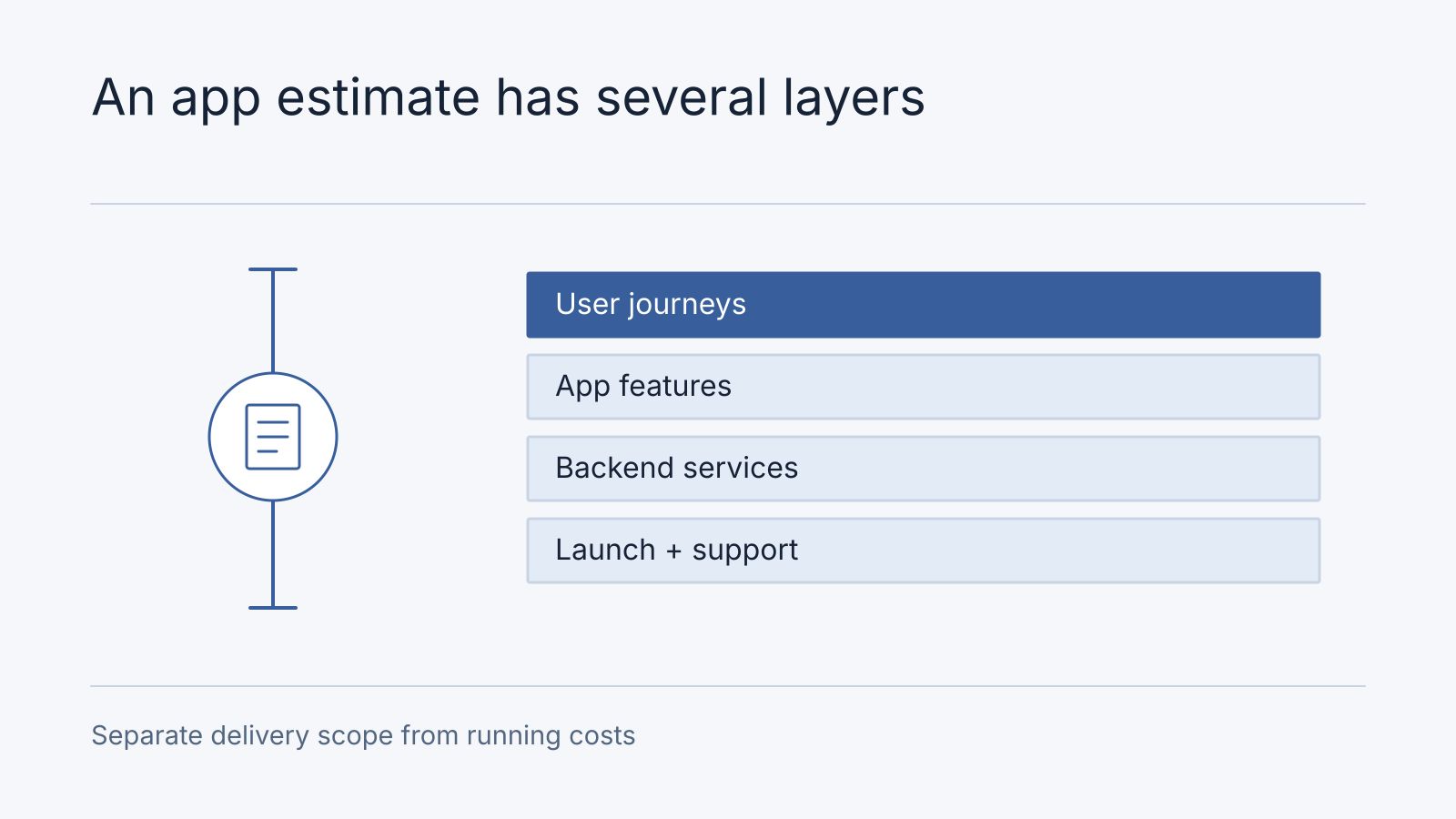
Budget separately: GST or other applicable taxes, developer-store account fees, hosting, domains, messaging and map usage, payment-provider fees, ongoing monitoring, support, compatibility updates, additional languages, and changes beyond the agreed scope. Estimate these ongoing costs from expected active users, transactions, storage, and support coverage; they are excluded from the build ranges above.
The three scope examples below show how a simple, mid-complexity or complex mobile app changes the work to be priced. They are illustrative requirements, not delivered client projects, Singapore market averages or fixed quotations. The displayed budget ranges are historical planning examples. Review Nodesify’s current pricing and engagement terms and request a scope-based quotation rather than treating those examples as a current offer.
Mobile app cost depends on what the product must do, which systems it integrates with and how it will be maintained. A broad market range can hide these differences. Start with a scope and a set of assumptions that competing suppliers can price consistently.
Define the first usable release
If your project is in Malaysia and depends on an existing store, offline staff workflow, or POS connection, our Malaysia mobile integration budget guide examines those dependencies. This article retains the broader Singapore scope comparison.
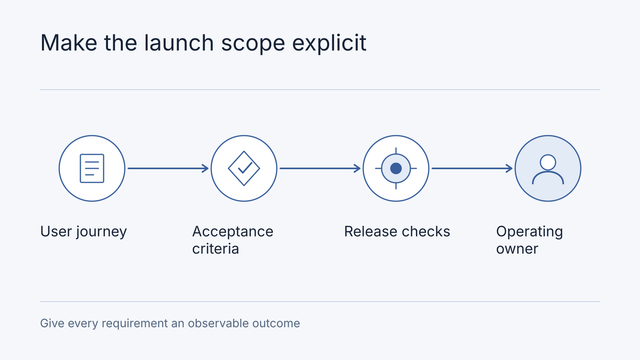
List the user roles and the tasks each must complete. Identify authentication, payments, notifications, offline behaviour, administration and reporting requirements. Specify whether there is an existing backend or whether the project must create one.
Separate essential workflows from later enhancements. An initial release still needs reliable handling of errors and user data; reducing scope should simplify the product rather than leave a critical workflow unfinished.
For an appointment app, for example, the first release might include customer sign-in, available slots, booking changes, staff administration and reminders. Multi-location scheduling, offline check-in, marketplace payouts and integration with a legacy system each add distinct work. Mark each as included, excluded or awaiting investigation before comparing prices.
Three illustrative scopes to price separately
| Scope example | Include in the first quote | Price separately or investigate |
|---|---|---|
| Single-location appointment app | Customer booking, staff calendar, reminders and a basic admin view | Payments, multiple branches and legacy calendar integration |
| Field-service app | Staff sign-in, assigned jobs, photos, status updates and office review | Offline synchronization, device management and dispatch integration |
| Multi-party service platform | Customer and provider accounts, permissions, payments and dispute handling | Payout rules, identity checks, high-volume support and migration |
These are planning scenarios, not Nodesify project histories. Give suppliers the same roles, platform targets and acceptance checks for the chosen row. A quote at one level cannot be compared fairly with another if it omits the backend, administration or support needed to run it.
Turn a planning range into a quotation
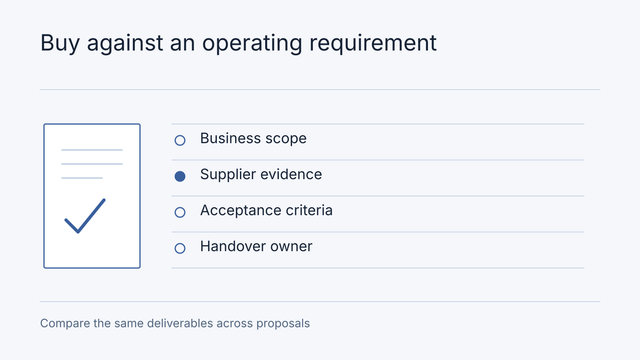
Give every supplier the same scope brief. A reviewable estimate should explain:
Our mobile app scope, quotation and launch checklist provides a reusable brief for the first complete user journey, acceptance examples, account ownership and release responsibilities. Fill it in before requesting competing estimates.
| Decision | What to specify |
|---|---|
| Users and permissions | Customer, staff and administrator tasks, with access boundaries |
| Platforms | iOS, Android, supported devices and whether a web admin is included |
| Existing systems | API documentation, sandbox access, data ownership and migration needs |
| Reliability | Offline requirements, peak activity, recovery and notification failures |
| Release evidence | Agreed workflows demonstrated on target devices, with account and source handover |
| Commercial scope | Deliverables, assumptions, dependencies, acceptance gates and change pricing |
If an integration has no working API or documented data format, ask for a bounded discovery step before committing to its implementation price. Our architecture audit can establish those constraints. For a wider operational change, the digital transformation roadmap shows how to phase the work and assign ownership.
Keep mobile and business-system budgets separate
Nodesify’s mobile service pricing and mobile planning ranges remain separate from the focused Zen-based business-system offer. A clickable prototype does not include a production mobile app, store distribution or every backend integration. The Zen example build band should not be used as a mobile-app quotation.
Choose discovery according to the uncertainty: a clickable prototype for screens and workflows, an architecture audit for existing technology, or separately scoped coded R&D for technical feasibility. Where paid discovery is credited toward a fixed-scope build, it counts once within the complete project total and against the first milestone. The current payment terms explain the 40/40/20 schedule. MYR is the base currency; agree the settlement currency and exchange rate in the quote.
For a Singapore buyer’s planning exercise only, assume a fictional SGD30,000 implementation, SGD150 monthly hosting, SGD600 annual vendor accounts and SGD400 monthly support: SGD37,200 in year one and SGD7,200 in the following year without new development. These invented SGD inputs are neither Nodesify rates nor a conversion of MYR prices. Taxes, store charges, messaging/payment usage, content, migration, internal staff time and later changes remain separately priced or unknown. Replace every input with an approved quote before budgeting.
Compare development approaches
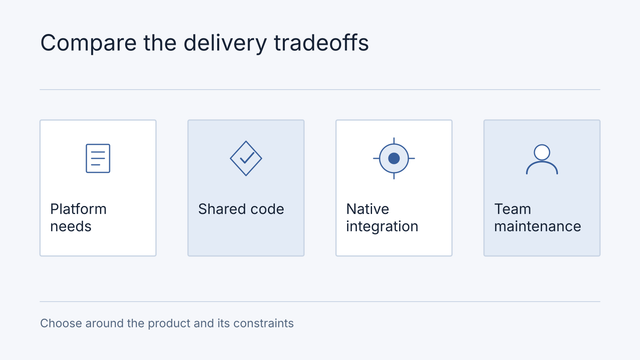
Native and cross-platform implementations can both be appropriate. Evaluate required device APIs, platform-specific behaviour, team experience and long-term ownership. Shared code can reduce duplication, but it does not establish a universal percentage saving or eliminate platform-specific work.
Ask the supplier to identify uncertain integrations and explain how those uncertainties affect the estimate. Agency location and hourly rates alone do not predict total delivery cost.
Budget beyond the build
| Cost area | Examples to clarify |
|---|---|
| Product delivery | Design, implementation, backend and content preparation |
| External services | Hosting, messaging, maps, identity and payment services |
| Release | Store accounts, review preparation and submission support |
| Operation | Monitoring, incident handling, support and compatibility updates |
Apple lists a standard Developer Program membership of USD99 per membership year, with regional pricing and eligible waivers. Google Play lists a USD25 one-time registration fee. Confirm eligibility and current terms through Apple enrollment and Google Play registration.
An annual operating-system release does not by itself mean every app will be delisted. Budget for maintenance against actual platform policies, dependency changes and compatibility issues.
Read a planning range with its exclusions
Map the first-release examples to the budget assumptions: a simple service-request app still needs a receiving workflow and account owner; a connected commerce app adds catalogue/order/payment integration; an operational field app adds permissions, sync and exception handling. A historical planning band is useful only when its included work matches the chosen scenario. It is not a quotation for these examples.
Record app design/delivery, backend, integrations, migration, store release, recurring services and maintenance as separate rows. If an existing backend is assumed, name it and verify the required endpoints. If no backend exists, the row cannot be zero merely because the visible app has few screens. Attach the mobile scope checklist to the estimate.
Frequently asked questions
Is an SGD display amount the settlement amount?
Use the currency and conversion terms agreed in the quotation. Preserve the base amount and conversion date when comparing offers; do not assume a display conversion fixes a future invoice rate.
Does paid discovery count twice, and is store approval guaranteed?
Record any credited discovery explicitly against the complete project total and milestone. Submission assistance does not control an app store’s approval decision; assign response work and launch dependencies in the agreement.
Match security to the data and risk
Singapore’s PDPA requires reasonable security arrangements; it does not universally mandate biometrics, end-to-end encryption or a particular architecture for every app. Review the PDPC’s data-protection obligations, along with any sector-specific requirements that apply.
Document acceptance criteria, source and account ownership, support coverage and change pricing in the proposal. A mobile development consultation should turn those requirements into an estimate whose assumptions you can review, rather than an unsupported headline price.
If your first release is still a web-based prototype, compare the retention, handover and rebuild questions in our Manus versus custom development planning guide. Its application example is hypothetical. A prototype can clarify workflows, but its hosting bill is not an estimate for delivering and operating a store-distributed mobile app.