业务流程与审批
将申请交给合适的人员,并追踪每项决策。我们根据运营流程明确审批阶段、升级规则、例外处理与授权代批。
英文范围示例
Your team is tracking requests, approvals and status across spreadsheets or email. Start with one workflow and the people who own it.
Use a standard website for public information. Compare an independent application with Zen when roles, records and dashboards are central.比较选项
Illustrative first release: a requester submits a purchase request, an approver checks it, a rejected request returns with a reason, and an approved record appears in the status report. Accounting posting remains a later decision.
Acceptance example. A requester cannot approve their own request when that rule is agreed. A rejected request retains its reason and the approved report matches the accepted records.
Read the sample scope, acceptance and handover recordsCompare existing architecture, reusable dashboard needs, workflow constraints, source and dependency licences, and the team that will maintain the application. The choice does not imply a guaranteed saving.
Agree repository access, licences, documentation, environments and a handover review in the proposal. Reusable and third-party components retain their applicable terms.
Record who can change a rule, its effective date and the treatment of requests already in progress. The proposal should distinguish configurable rules from changes that require development, review and a separate estimate.
Agree source records, field mappings, duplicate handling and reconciliation totals before migration or integration. Name the person who resolves exceptions and approves the result. Accounting posting and historical cleanup are included only when the proposal lists them.
Specify the events to record, actor and timestamp fields, export format, access roles and retention period. Agree deletion, backup retention and export checks with the operating owner. An audit trail does not by itself establish compliance, and unlimited storage or retention is not assumed.
企业应用用于支持组织内部的工作,可涵盖审批流程、运营门户或相互连接的业务模块。您可以从一个流程开始,无需替换现有企业资源规划(ERP)系统。
从需要改善的工作开始。提案明确实现该流程所需的模块、用户、数据与集成。
将申请交给合适的人员,并追踪每项决策。我们根据运营流程明确审批阶段、升级规则、例外处理与授权代批。
在共享应用中管理客户、订单、库存或项目记录。开发页面与业务逻辑前,约定验证规则、记录归属与生命周期规则。
为团队提供决策所需的信息。我们明确报表计算方式、源数据、筛选条件与导出要求,让每份报表都有清晰定义与可靠输入。
根据员工职责分配访问权限。我们为应用及其运行环境明确身份验证、权限、敏感字段与审计要求。
连接支持的会计、客户关系管理(CRM)、ERP 或其他系统。确认集成前,我们会明确 API 访问、数据流向、错误处理与第三方费用。
按约定的数据清理、映射、试导入与验收检查,将现有记录迁移至新应用。提案明确交接包含的部署文档与团队培训。
评估业务流程、现有系统与长期运行需求后,我们选择实施方式。如果 Nodesify Zen 的可复用基础适合项目,可将它作为其中一个选项。
根据您的需求选择架构与业务逻辑来开发应用。此方式适合现有技术环境、专业流程,或不适合可复用管理面板基础的限制条件。
在适合时采用 Nodesify Zen 的可复用管理面板基础。我们配置该基础,并围绕它开发约定业务模块。Zen 是可选方案,采用商业许可。完整 ERP 需另行约定项目范围。
了解 Zen 开发基础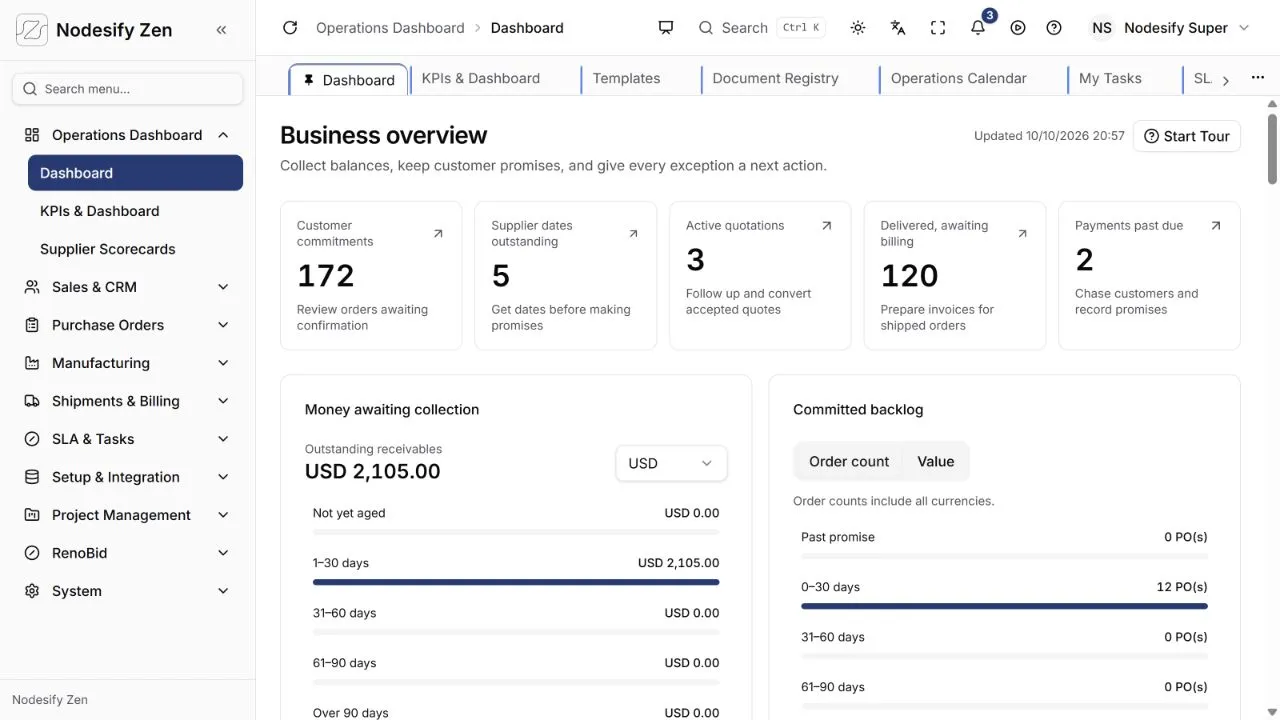
评估谁使用应用、需要作出哪些决策及使用哪些记录。明确首个完整流程、系统限制与运行职责。如果不确定事项需要调查,探索服务另行约定范围。
评估谁使用应用、需要作出哪些决策及使用哪些记录。明确首个完整流程、系统限制与运行职责。如果不确定事项需要调查,探索服务另行约定范围。
明确模块、界面、权限与验收标准。根据适用性选择独立开发或 Zen。实施前确认假设、排除事项与里程碑。
明确模块、界面、权限与验收标准。根据适用性选择独立开发或 Zen。实施前确认假设、排除事项与里程碑。
在约定里程碑评审可运行功能,并与实际用户检查业务规则。范围外变更先评估与报价,再决定是否纳入交付。
在约定里程碑评审可运行功能,并与实际用户检查业务规则。范围外变更先评估与报价,再决定是否纳入交付。
完成约定验收检查、准备部署并培训指定团队。记录源代码访问、许可、文档与维护职责,让团队了解如何运行应用。
完成约定验收检查、准备部署并培训指定团队。记录源代码访问、许可、文档与维护职责,让团队了解如何运行应用。
报价依据业务模块、用户、数据量、集成、报表、迁移、培训与交付风险确定。可复用基础的费用只涵盖该基础,不代表完整应用的价格。
查看价格与合作方式您的业务数据归您所有。合同约定定制交付物的权利、源代码访问与部署文档。Zen 与第三方组件保留各自适用许可。
上线前确认托管、监控、备份、维护与事件处理职责。提案列明支持范围与续费成本。新增功能与额外数据工作另行约定范围。