An agency and an independent freelancer can both be effective software suppliers. The meaningful differences are the people assigned, the delivery process, capacity and contractual commitments. Neither the supplier’s location nor its business model guarantees quality, accountability or a lower total cost.
Compare the actual engagement
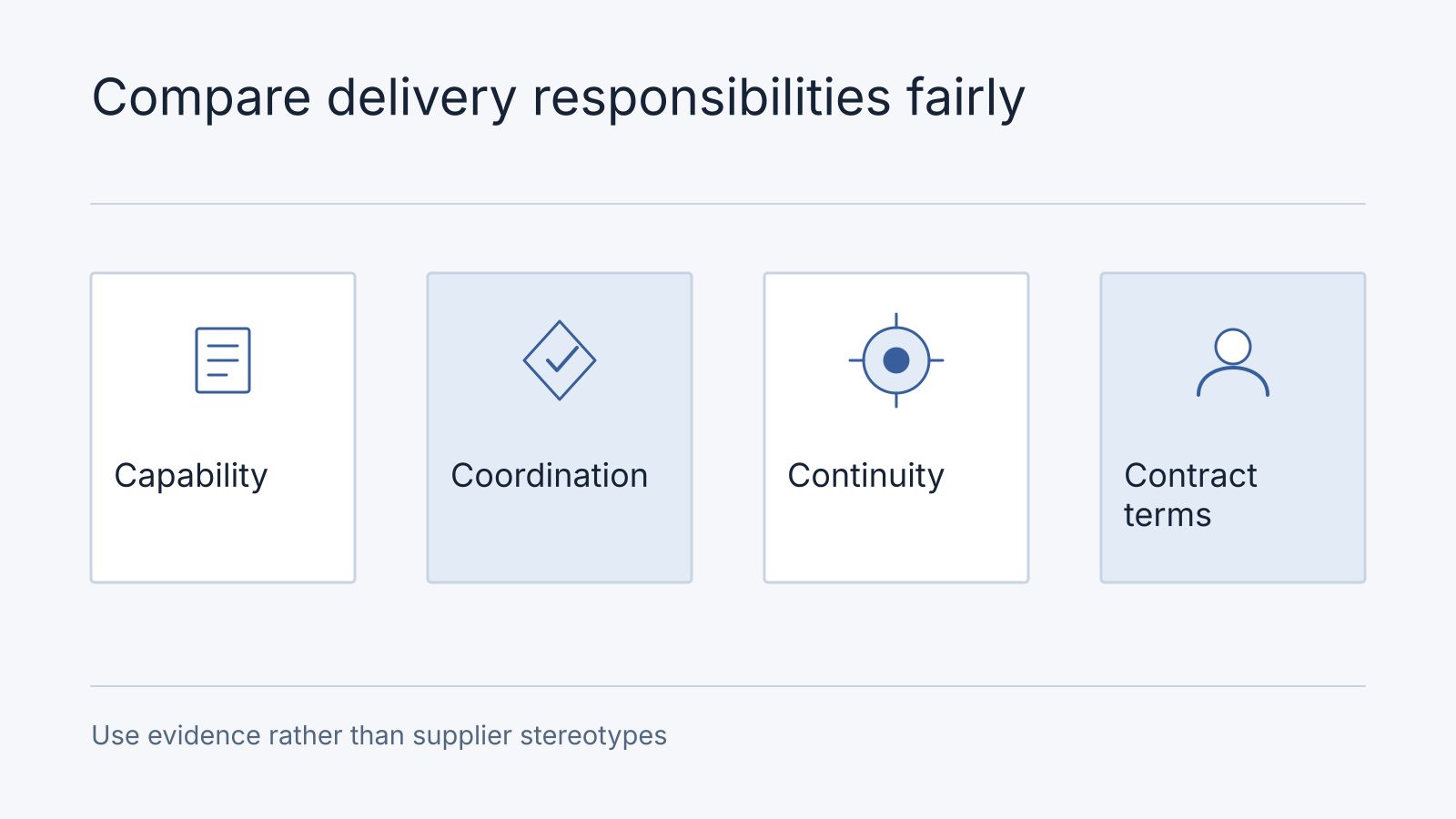
| Requirement | Questions for either supplier |
|---|---|
| Capability | Who will implement and review the work, and what relevant experience do they have? |
| Capacity | What availability is committed, and what happens if a key person is absent? |
| Coordination | Who manages requirements, decisions, dependencies and progress? |
| Continuity | How are documentation, credentials and code kept accessible to your organisation? |
| Support | What support is included, during which hours and under what response terms? |
An agency may offer several disciplines and additional capacity, but verify who is actually assigned. A freelancer may provide direct access to a specialist, but availability and continuity need explicit planning. Do not assume agencies always use junior staff or independent engineers cannot support complex work.
Estimate the full cost
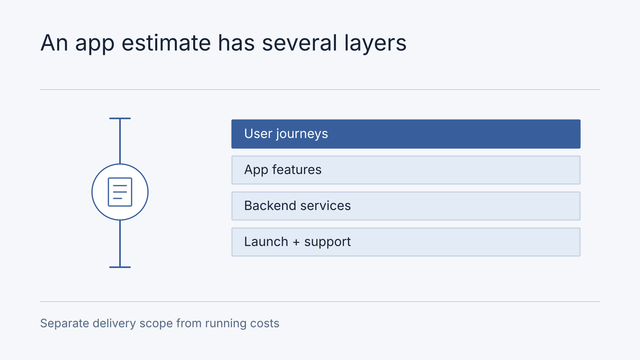
Compare equivalent deliverables and include your own coordination time. Rates can differ without producing the same difference in total cost. Integration uncertainty, unclear requirements and delayed decisions affect either model.
Ask for assumptions, exclusions, recurring charges and a change process. Avoid relying on universal percentage savings, unsupported client anecdotes or an advertised package whose terms have not been confirmed.
Assess contracts and data handling
A local supplier does not automatically remove a customer’s legal responsibilities. An offshore supplier is not automatically outside every contractual remedy. Evaluate governing law, enforcement, intellectual property, confidentiality and the actual data-processing arrangement with advice appropriate to the engagement.
Document where data may be processed, who can access it and what subcontracting is permitted. The location of the person you speak to is not proof of where all systems or subprocessors operate.
Reduce uncertainty before expanding
Compare two fictional buying contexts. A team with a product owner and internal reviewer needs a specialist to implement one documented integration: it can retain requirements, acceptance and release coordination internally. A business with no technical coordinator needs design, development, content and release decisions managed together: it must obtain a named coordination commitment or appoint that owner itself. Either an agency, an independent specialist or a mixed team may fit if the assigned responsibilities are demonstrated.
| Same sample milestone | Supplier evidence to record | Internal owner and unresolved dependency |
|---|---|---|
| Complete one enquiry-to-record journey | Working normal and failure paths tied to the scoped requirement | Operations approves the rule; API access may remain pending |
| Review and release the change | Named implementer/reviewer, repository access and deployment notes | IT accepts release and recovery ownership |
| Continue if the named engineer is absent | Handover record and specific replacement/availability arrangement | Business owner accepts continuity terms |
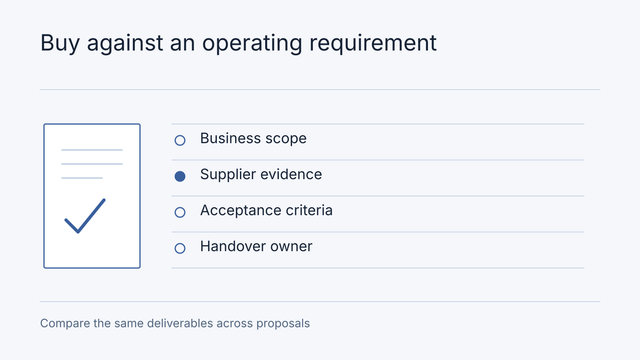
Mark each response supplied, missing or unverified. Do not assign a higher score merely because a supplier calls itself an agency. Count the buyer’s coordination hours in the comparison.
Give each supplier the same sample milestone: a defined workflow, a working demonstration, repository access, deployment notes, acceptance criteria and an itemized change process. Compare the evidence they supply, who will operate the result and the complete cost of reaching acceptance. This template is illustrative; supplier location by itself does not establish quality, legal protection or the total price.
A bounded discovery or implementation milestone can help assess working practices and technical decisions. Define useful deliverables and acceptance criteria; paying for discovery does not make the engagement risk-free. Similarly, a free proposal is not evidence that its author lacks technical competence.
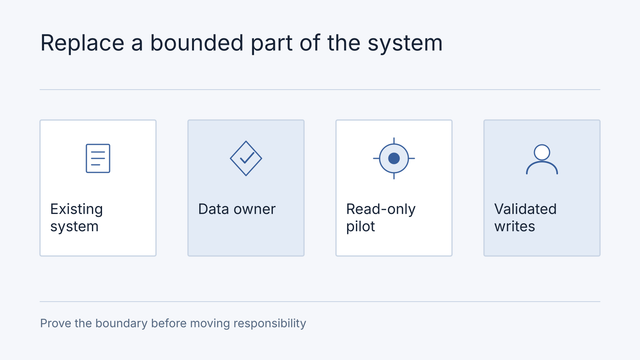
Keep business-owned access to repositories, deployment accounts and documentation. Agree on how unfinished work and credentials are handed over if the engagement ends.
Choose the supplier whose evidence and commitments fit the work. Our enterprise procurement guide provides a fuller checklist for scope, data handling and long-term operation.
Frequently asked questions
Who manages requirements when we hire a specialist?
Name that person explicitly. If it remains inside your business, reserve time for decisions, dependencies and acceptance; the specialist’s delivery rate does not include an unnamed project-management role.
Can we use a mixed team, and what if someone leaves?
Yes, with clear interfaces, review authority and shared business-owned records. Agree access removal, replacement capacity and unfinished-work handover before a departure. A delivery-responsibility discussion can clarify the gap; paid discovery is optional when the requirements are already clear.