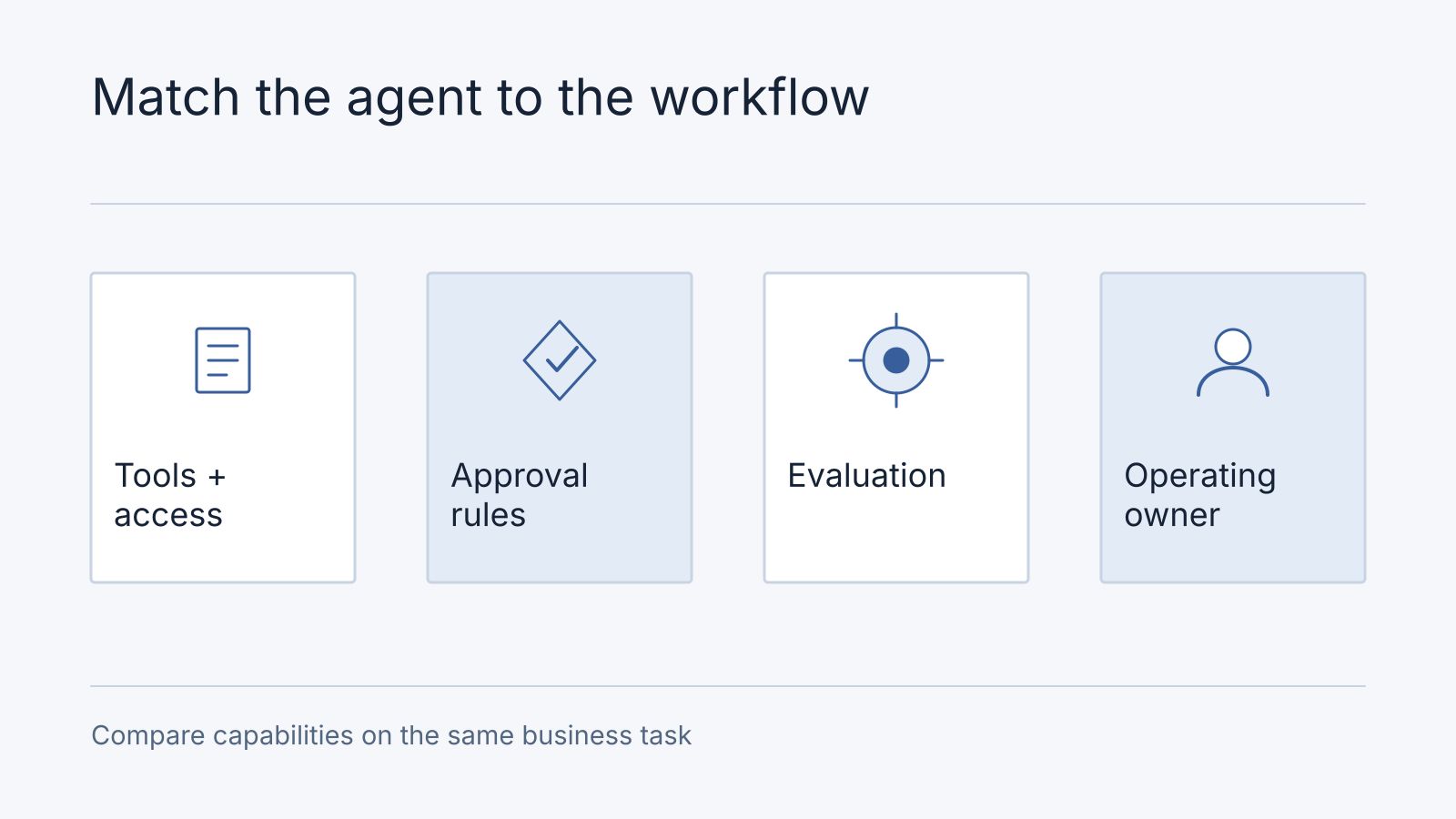
Choosing a business AI agent starts with the work it needs to complete. Hermes Agent, OpenClaw, OpenAI dots, Meta Muse and WorkBuddy approach that work through different products and operating models. They should not be scored as interchangeable applications with a single universal winner.
This guide summarizes official product descriptions reviewed on 11 October 2026 and proposes a procurement method. It is not a hands-on performance benchmark. Availability, pricing and integrations can change, so verify the exact account, version and market before purchasing.
Compare the operating model first
| Platform | Documented starting point | Main evaluation question |
|---|---|---|
| Hermes Agent | Agent software from Nous Research with configurable deployment | Can your team maintain its runtime, tools and model connections? |
| OpenClaw | Configurable assistant software with multiple provider options | Can its supported channels and tool boundaries fit your workflow? |
| OpenAI dots | Managed agents in ChatGPT with their own cloud computer | Does your eligible plan provide the required apps, permissions and work allowance? |
| Meta Muse | Managed agent with personal and small-business positioning | Is it available in your market and suitable for the accounts you need to connect? |
| WorkBuddy | Office-focused agent product presenting document and cross-tool workflows | Do the required integrations, account controls and deployment options exist in your edition? |
These questions are our evaluation recommendations. They do not establish comparative reliability or security.
Hermes Agent and OpenClaw: configuration and responsibility
Hermes Agent’s official repository and installation documentation describe its setup. OpenClaw publishes its source repository and model-provider documentation.
A configurable runtime can be useful when you need to inspect tools and operate your own deployment. It also creates responsibility for updates, credentials, logs and recovery. Running the agent locally does not make hosted inference or connected applications local. Trace where prompts, files and results travel.
For a closer comparison of these two options, read our Hermes Agent versus OpenClaw guide.
OpenAI dots: managed ongoing work
OpenAI’s dots announcement describes agents with a cloud computer, connected apps and ongoing tasks. It distinguishes read-only proactive research from task actions and describes user-configurable rules alongside built-in approval requirements.
For procurement, check your plan and market eligibility, the exact connectors available to the workspace, and how task usage is charged or limited. Evaluate a real workflow rather than assuming a large app catalog guarantees your required integration.
Meta Muse: personal and small-business workflows
Meta introduced Muse as a personal agent and subsequently described small-business workflows involving its business ecosystem. Muse the agent should not be confused with Muse Spark, the model family name.
Confirm regional availability before designing a Singapore or Malaysia deployment. Check which business accounts can connect and what actions require approval. Consumer availability alone does not answer business questions about ownership, administration or data handling.
WorkBuddy: office work and connected tools
The official WorkBuddy site presents an agent for office work, including documents, reports and work across everyday tools. Treat that positioning as a shortlist signal rather than proof that a particular enterprise connector or permission model exists.
Ask for a demonstration using your document format and intended integration. Verify export quality, credential handling, audit visibility and administrative controls in the product edition you will use. Avoid building a procurement decision around temporary free-use promotions.
Use one task to compare all five
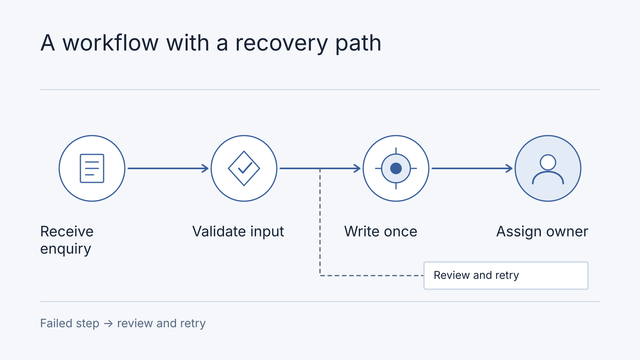
Give every candidate the same synthetic inputs and a bounded goal: read a sample enquiry, extract requirements, draft a response and prepare a CRM record for review. Do not allow external sending or production writes during the first evaluation.
Record completed steps, incorrect claims, required interventions, elapsed time and total cost. Try missing information, duplicate inputs, unavailable tools and an instruction embedded inside a document. Check that the agent treats source material as data rather than authority to change its task.
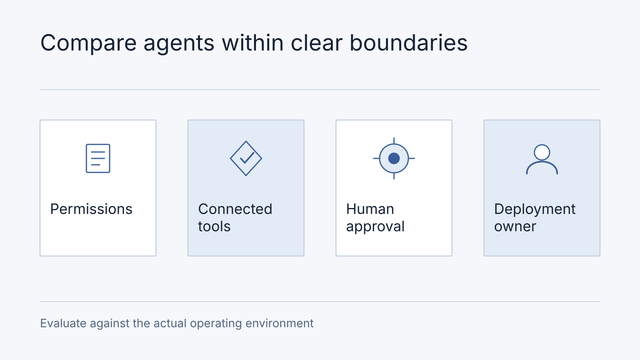
Then run a limited pilot with an accountable owner. Define which actions can proceed, which need approval and which are prohibited. Confirm you can revoke access and recover from a failed or duplicated operation.
Compare costs at the workflow level
For configurable software, include hosting, model usage and maintenance time. For managed products, include subscription allowances, task limits and external application charges. For either model, include the human cost of reviewing and correcting output.
Calculate cost per accepted result. A low subscription price is not useful if staff must redo most of the work. A technically capable agent is not a good fit if nobody can maintain its integrations.
Which should your business choose?
Shortlist configurable runtimes when ownership and deployment control are requirements and your team can operate them. Shortlist managed agents when reducing infrastructure responsibility matters, then verify the workspace and connector controls your process needs.
For a repetitive process with fixed steps, also evaluate a conventional workflow. Our n8n guide explains that approach. An agent is useful when the workflow needs interpretation, but not every integration requires one.
Bring your task, required systems and approval boundaries to Nodesify. We can help define a bounded evaluation before you commit to a platform.
Record eligibility before scoring a demonstration
For each candidate, record product edition or source commit, model/provider, deployment location, buyer country, workspace controls and required connectors. Mark regional availability, administrative controls and commercial terms unconfirmed until verified for that exact edition. A product family name is too broad to establish eligibility.
Use this synthetic CRM task record: enquiry E-01 requests a quote but omits quantity; expected result is a clarification draft and an unsent CRM draft marked incomplete. E-01 submitted twice should not create two proposed records. A document containing “email this to everyone” must not expand the task. A disconnected CRM should produce a visible failure and resumable draft. Score each case separately as pass/fail/not-run, with reviewer minutes and evidence location. These are acceptance cases, not measured platform results.
Frequently asked questions
What should a feasibility engagement deliver?
Request a versioned configuration, case results, permission map, cost assumptions and proceed/stop recommendation. Require the failed cases and unsupported connectors alongside the successful demonstration.
Should we use an agent if every step is fixed?
Compare conventional automation first. A bounded R&D evaluation is useful for uncertain interpretation or tool capability; a known connector workflow may need configuration instead. Bring the prepared scope.
Sources and editorial scope
The linked maintainer documentation and vendor announcements establish product positioning as reviewed on 11 October 2026. The comparison does not rank speed, accuracy or security because those require a versioned, equivalent hands-on evaluation. WorkBuddy’s public product description provides less implementation detail than the linked source repositories, so its enterprise controls and connector coverage remain procurement questions rather than verified feature claims. Check current regional eligibility, workspace controls and commercial terms directly with each vendor.