Hermes Agent and OpenClaw are evolving agent platforms. Teams should choose between them based on their real workflow, data governance, and maintenance model—not launch metrics or one-line claims.
This update focuses on the decision points that reduce risk:
- how each option is deployed,
- where model calls are sent,
- integration and approval control,
- and what happens when something fails in production.
Deployment and model access
Hermes Agent supports deployment options including servers and hosted model access. Installing it does not inherently require a local GPU. Read the Hermes installation guide and repository for the requirements of the configuration you intend to run.
OpenClaw supports multiple model providers and local configurations; it is not restricted to Apple’s Core ML. Its provider documentation is the appropriate starting point for checking a specific backend.
Running an agent on your own machine is different from running the whole workflow offline. Hosted inference, web browsing and messaging integrations require network access. Identify every endpoint that receives prompts, attachments or tool results before describing a deployment as private or local.
Compare architecture and control
Use the following framework before picking a winner:
- Model provider strategy: Can you mix providers, and can you switch if a provider degrades?
- Permission boundaries: Do tools have restricted scopes by task, data source, and risk level?
- Data handling: Are prompts, logs, and intermediate memory persisted safely with retention controls?
- Maintenance model: How often will model and dependency updates be applied?
- Operational clarity: Are errors visible and actionable for non-technical owners?
Example comparison matrix
| Area | Hermes Agent | OpenClaw |
|---|---|---|
| Model strategy | Supports multiple backends depending on setup | Supports multiple providers and local options |
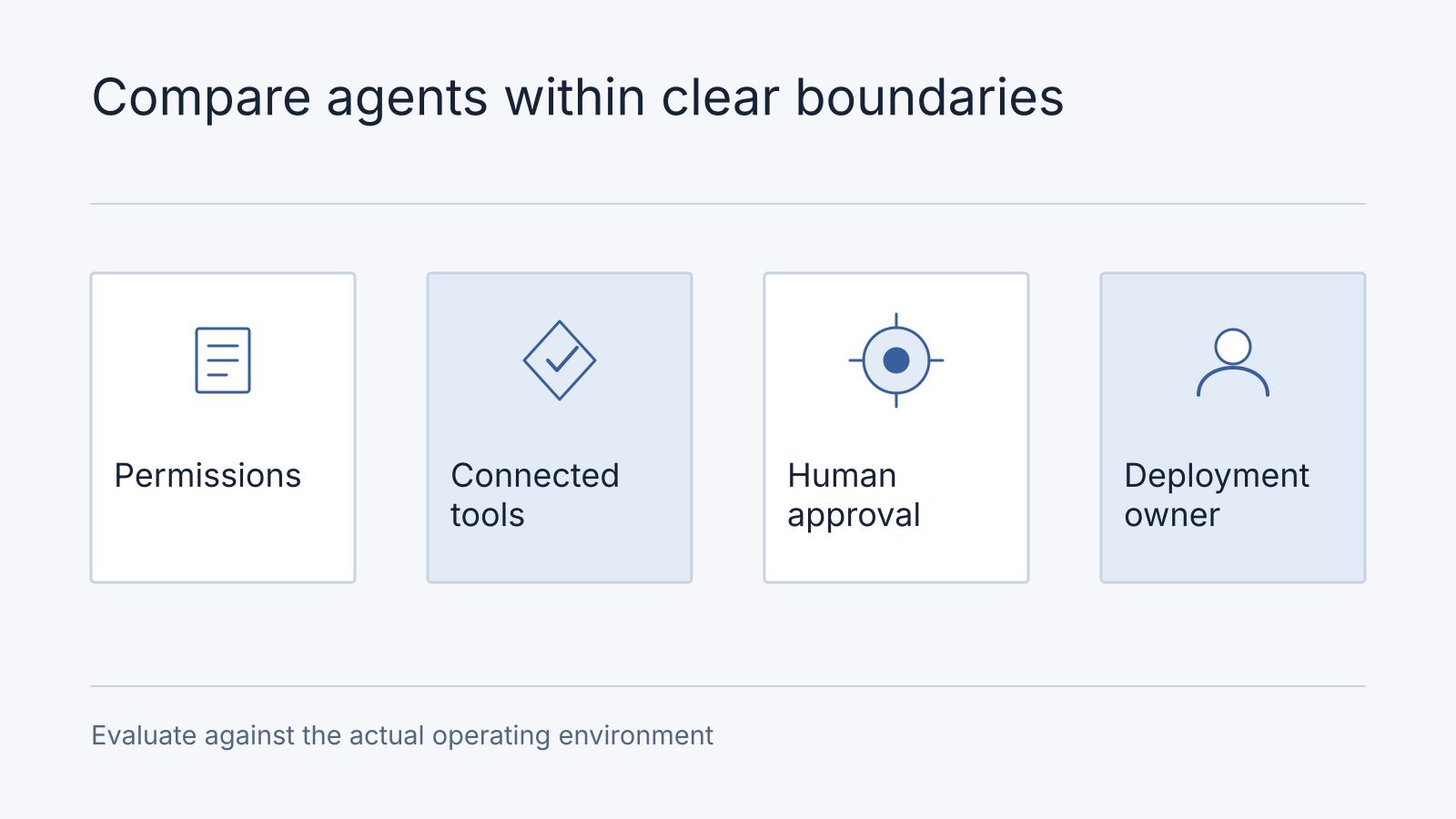
| Fit to verify | Required tools, deployment owner and approval controls | Required tools, deployment owner and approval controls |
| Security posture | Depends heavily on your orchestration and hardening choices | Depends heavily on your orchestration and hardening choices |
| Maintenance load | Ongoing configuration and update management required | Ongoing configuration and update management required |
| Onboarding effort | Unmeasured for your configuration | Unmeasured for your configuration |
The outcome is rarely a universal winner. Most teams should standardize on one platform only after piloting both against their top 5 production-like tasks.
Compare a concrete workflow
| Decision | What to verify |
|---|---|
| Model | Supported provider, context limits, quality and usage costs |
| Integrations | Required accounts, network access and available actions |
| Permissions | File access, command execution and approval boundaries |
| Persistence | What memory or skills store and how to inspect or delete it |
| Operations | Updates, credentials, logs, recovery and ownership |
Model Context Protocol (MCP) is an integration protocol. OpenRouter is a model-access provider. They occupy different parts of a deployment and should not be treated as interchangeable alternatives.
Editable skills and persistent memory can change what an agent does or remembers. Their existence does not establish that the model’s weights are being trained. Inspect the implementation and storage behaviour before making that claim.
Run a limited evaluation
Keep a versioned comparison record before relying on any feature row: project release or commit, model/provider configuration, operating system, enabled tools, permission settings and test date. Give both agents the same synthetic task and score completed steps, required human intervention, unexpected tool calls and recovery effort. A vendor feature page or successful one-off run cannot establish comparative reliability for your workload. This page is an evaluation method, not a Nodesify client benchmark.
Give each candidate the same low-risk tasks with representative inputs. Record successful outcomes, necessary interventions, latency and total costs. Local inference still consumes hardware, electricity and maintenance effort; hosted inference introduces provider charges and data-handling considerations.
Use narrowly scoped credentials and review actions that affect production systems or external recipients. Check the OpenClaw repository and Hermes release information again before adopting a particular version. A successful demonstration is a starting point for operational evaluation, not proof that an agent can safely handle every business workflow.
Pilot sequence with explicit stop points
The schedule below is illustrative; extend, shorten or stop it when evidence warrants. Before starting, record versions, OS, model endpoint, credentials, tool permissions and availability in the intended region. Mark every unverified prerequisite rather than scoring it as supported.
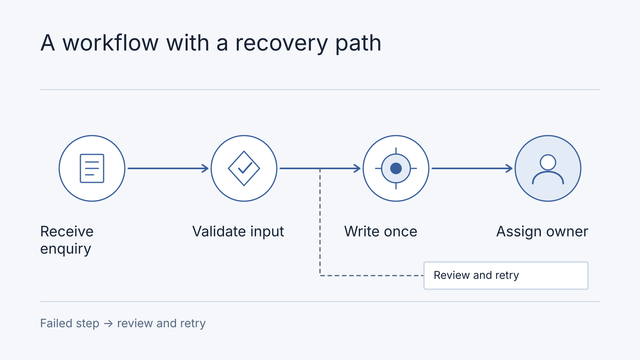
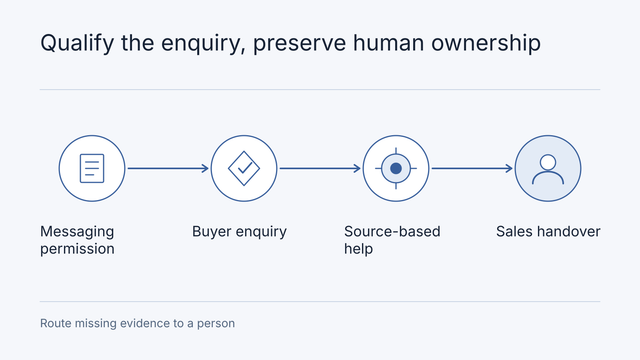
For a synthetic enquiry-to-CRM task, give both candidates the same missing-quantity input. Require a clarification draft, no external send and no production write. Score correct outcome, unexpected tool use, duplicate handling, reviewer minutes and recovery from a disconnected CRM as separate pass/fail/not-run entries. No comparative result is asserted here. Stop the pilot if authority boundaries cannot be demonstrated.
- Week 1: Run each platform on synthetic tasks and measure reliability.
- Week 2: Run a low-risk internal process and capture error/rollback counts.
- Week 3: Measure time to correct failures and handover quality from agent outputs.
- Week 4: Compare total cost, compliance risk, and team confidence before scaling.
If both platforms score similarly on reliability, favor the one that reduces your operational burden and makes permissions auditing easier for your team.
Frequently asked questions
Do we need a GPU, and does local installation mean offline operation?
A local GPU depends on the chosen inference setup, not the agent’s name alone. Hosted models and connected tools still exchange data over the network. Verify every endpoint and account before calling the whole workflow local.
What help should we request before committing?
Bring the versioned acceptance record to R&D for an unresolved feasibility question, or an architecture review for existing permissions and operating boundaries. Ask for a stop/proceed recommendation, not a predetermined platform winner.
Considering managed agents as well?
Our business AI agent platform comparison extends the shortlist to OpenAI dots, Meta Muse and WorkBuddy. It distinguishes managed products from configurable runtimes and lists the deployment, availability and permission questions to verify before a pilot.