A Malaysian business website that processes personal data needs a data-protection assessment, not just a privacy-policy link. Start with the purposes of processing, the parties involved and the applicable law. A contact form, checkout or analytics integration may create obligations, but collecting any cookie does not automatically establish the Act’s scope.
This guide was reviewed on 13 September 2026. It provides general information for planning a build; specific legal conclusions depend on the organisation and its data flows.
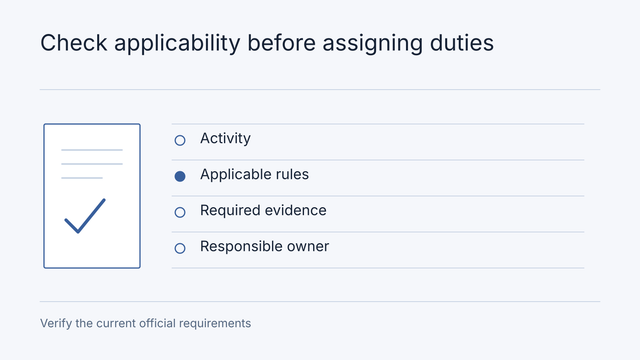
Establish whether the PDPA applies
Malaysia’s Personal Data Protection Act 2010 regulates personal-data processing in commercial transactions. Sections 2 and 3 address territorial application and exclusions; the location or nationality of the individual alone is not the test. The Act excludes Federal and State Governments. Its seven principles cover general processing, notice and choice, disclosure, security, retention, integrity and access. Consent is important, but section 6 also provides other processing grounds. Notices under section 7 must be in the national and English languages. See the official Act 709 text.
Use the amended term data controller. The Personal Data Protection Department operates under the Ministry of Digital. Map which organisation decides the purposes of processing and which suppliers process data on its behalf before allocating responsibilities.
Account for the 2024 amendments
Act A1727 received Royal Assent on 9 October 2024 and was gazetted on 17 October 2024, with phased commencement in 2025. Principle breaches can attract up to RM1 million, three years’ imprisonment, or both. Failure by a controller to make the required Commissioner breach notification can attract up to RM250,000, two years, or both. These are offence-specific maxima, not automatic penalties for every website defect. Processors now have direct Security Principle duties. Personal Data Protection (Amendment) Act 2024.
The published DPO criteria, effective 1 June 2025, cover processing personal data of more than 20,000 individuals; sensitive personal data including financial information of more than 10,000 individuals; or regular and systematic monitoring. Assess the organisation’s processing, rather than website traffic alone. JPDP DPO FAQ.
Translate obligations into a website scope
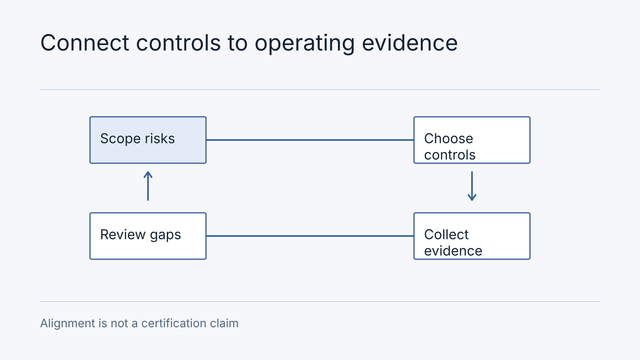
The following are implementation questions, not a statutory list of required products or algorithms.
| Area | Decision to document | Evidence to retain |
|---|---|---|
| Collection | Purpose, necessary fields and applicable processing ground | Data inventory and reviewed notices |
| Consent | Where consent is needed and how withdrawal works | Relevant consent records and notice versions |
| Security | Access controls, encryption, patching and supplier safeguards | Configuration, access reviews and remediation records |
| Retention | How long each record type is needed | Retention schedule and deletion execution records |
| Individual requests | How requests are authenticated, assigned and completed | Request register and response evidence |
| Incidents | Detection, escalation, notification assessment and ownership | Incident log and current response procedure |
TLS, appropriate encryption at rest, password hashing where passwords are used, and restricted administrative access can support the Security Principle. The law does not universally prescribe Cloudflare WAF, TLS 1.3, AES-256 or a particular self-service interface. Choose controls for the actual risks and verify that they work.
Likewise, a fixed two-year lead-retention period is not a universal rule. Document why the period serves the purpose and how legal retention duties or disputes affect deletion.
Handle analytics, requests and suppliers carefully
Inventory third-party scripts and the information they send. A banner alone does not prove that scripts respect consent choices. Verify the configured behaviour and the applicable processing ground before release.
Access, correction, retention and portability are related but different. Section 43A concerns a request for controller-to-controller transmission, subject to technical feasibility and format compatibility. A download button alone does not implement that workflow. Do not describe Malaysia’s PDPA as providing an unrestricted GDPR-style erasure right.
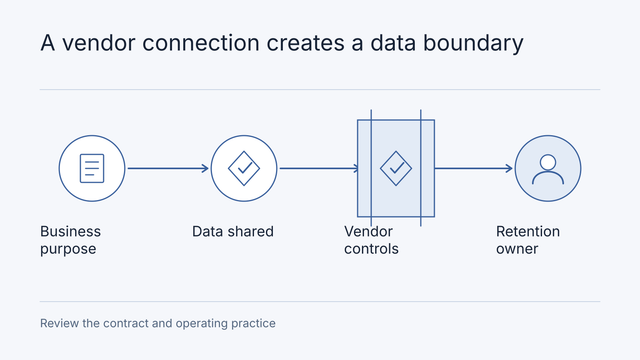
Supplier location does not prove compliance. Record hosting regions, support access, subprocessors, contractual safeguards and the applicable transfer basis. Our cloud-vendor PDPA guide covers those decisions in more detail.
Map one form through its actual destinations
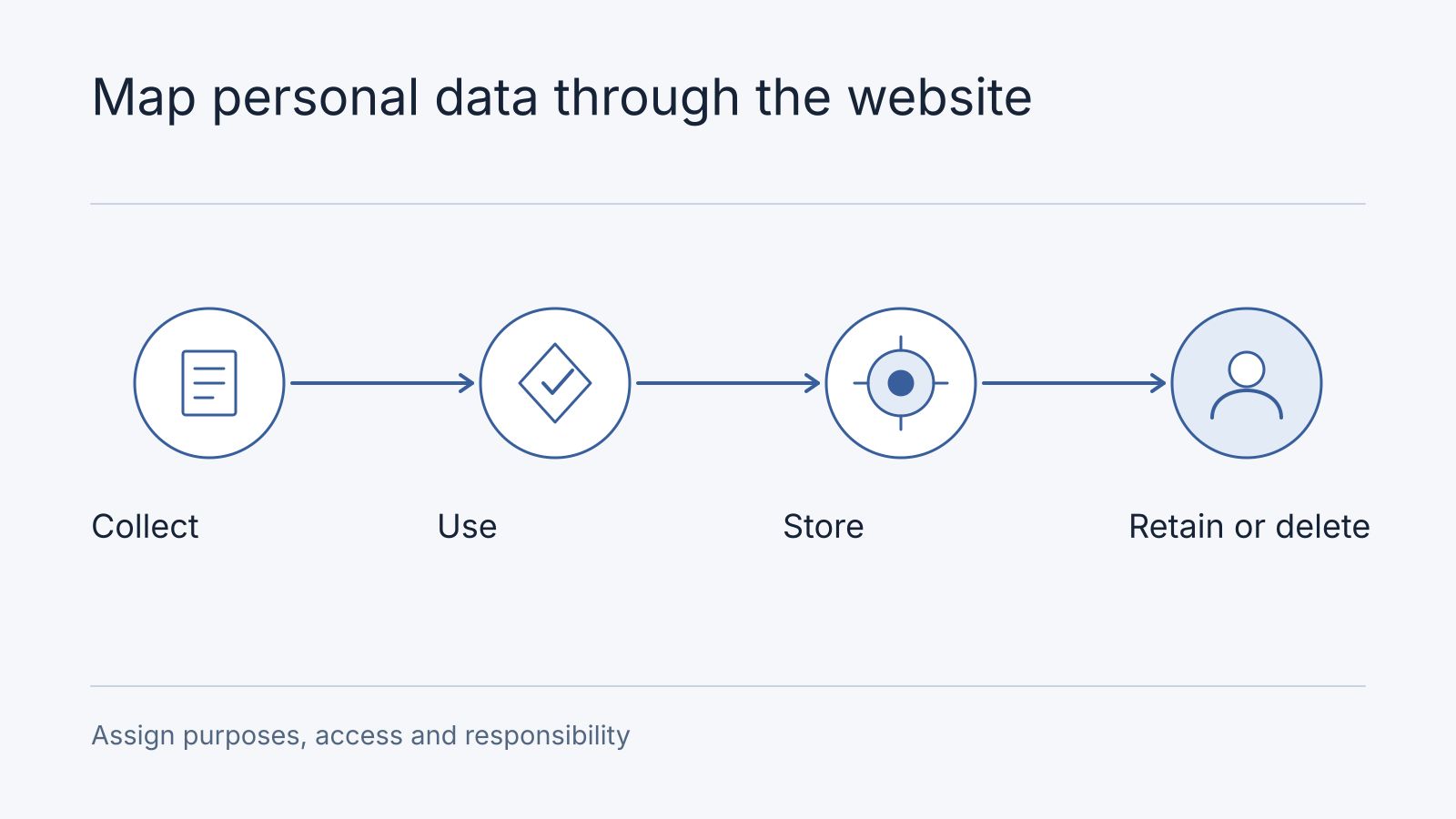
Illustrative flow: a contact form collects name, business email and enquiry; the application sends it to the agreed inbox and CRM; analytics records a submission event without the message text. The business owner confirms purpose and retention, the engineer records destinations and access, and the privacy owner approves the notice and applicable choices. Hosting and email logs must be included if they retain relevant data. This example does not establish your legal obligations or a lawful retention period.
For an access/deletion request, name the receiving contact, identity-verification owner, systems to search, decision maker and completion evidence. For an incident, name who preserves technical evidence and who decides the legal response. A developer should not silently make those legal decisions through default settings.
Frequently Asked Questions
Is translating a notice enough for a multilingual website?
No. Have the responsible reviewer confirm that every language describes the actual collection and processing consistently and meets applicable requirements. Translation does not correct an inaccurate data inventory.
What should website delivery include?
Agree a data-flow inventory, approved notice implementation, access boundaries and request/incident handover. Bring these to a website scope or an architecture audit for an existing system.
Does every website need a DPO?
No. Apply JPDP’s published processing thresholds and monitoring criterion to the organisation. A privacy contact can still be useful where mandatory appointment does not apply.
Does a compliant build require a consent checkbox on every form?
The appropriate notice and processing ground depend on the collection. Use explicit consent where required, and avoid treating one checkbox pattern as proof that all processing is lawful.
Can a local development agency take over all our PDPA liability?
A contract can allocate work and responsibilities, but it does not automatically discharge the client’s statutory duties. Request evidence of the controls relevant to your engagement.
How should we budget for compliance work?
Start with a website data-flow worksheet: list each form, analytics tag and external service; the data it receives; the purpose; the person who can access it; its retention decision; and the relevant notice or contract. Have the responsible privacy reviewer determine the applicable obligation before treating a particular control as mandatory. This is a scoping tool, not legal advice or a claim that software alone makes a site compliant.
Scope the data inventory, notice review, access controls, request handling, incident response and ongoing operation. Request a written quote with assumptions and exclusions rather than relying on a universal starting price.
For a build assessment, see our website development service or architecture audit service.