Disclosure: we build and maintain Astria. The examples and measurements below come from our own development work.
The ritual
A coding agent lands in an unfamiliar repository. It searches for a keyword, reads a few files, then searches for names it found inside them. Sometimes that is enough. Sometimes it spends several rounds reconstructing a call chain before it can decide where to make a change.
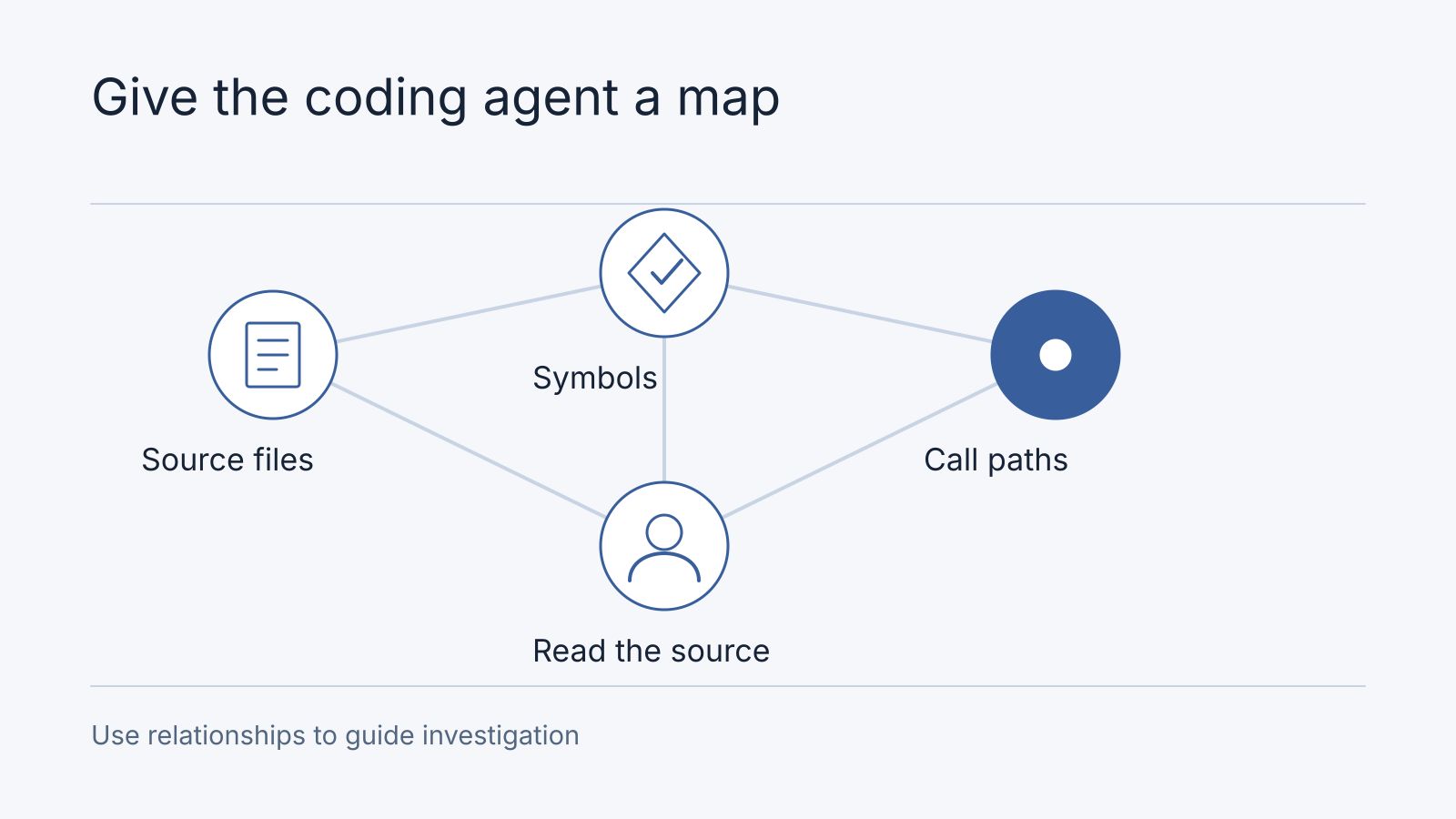
Text search is good at finding text. The harder questions concern relationships: which module owns this behavior, which callers depend on it, and whether two identically named functions are actually connected.
Compilers and language servers can supply some of that structure. Coverage depends on the language and tooling; runtime dispatch can still leave uncertainty. An agent working through file reads and search must reconstruct much of it for itself.
We built Astria at Nodesify to help coding agents navigate unfamiliar repositories through a local, queryable graph. It helps an agent locate relevant code and inspect connections before editing. The graph also needs to disclose when a connection is inferred, unresolved, or stale.
What a map adds
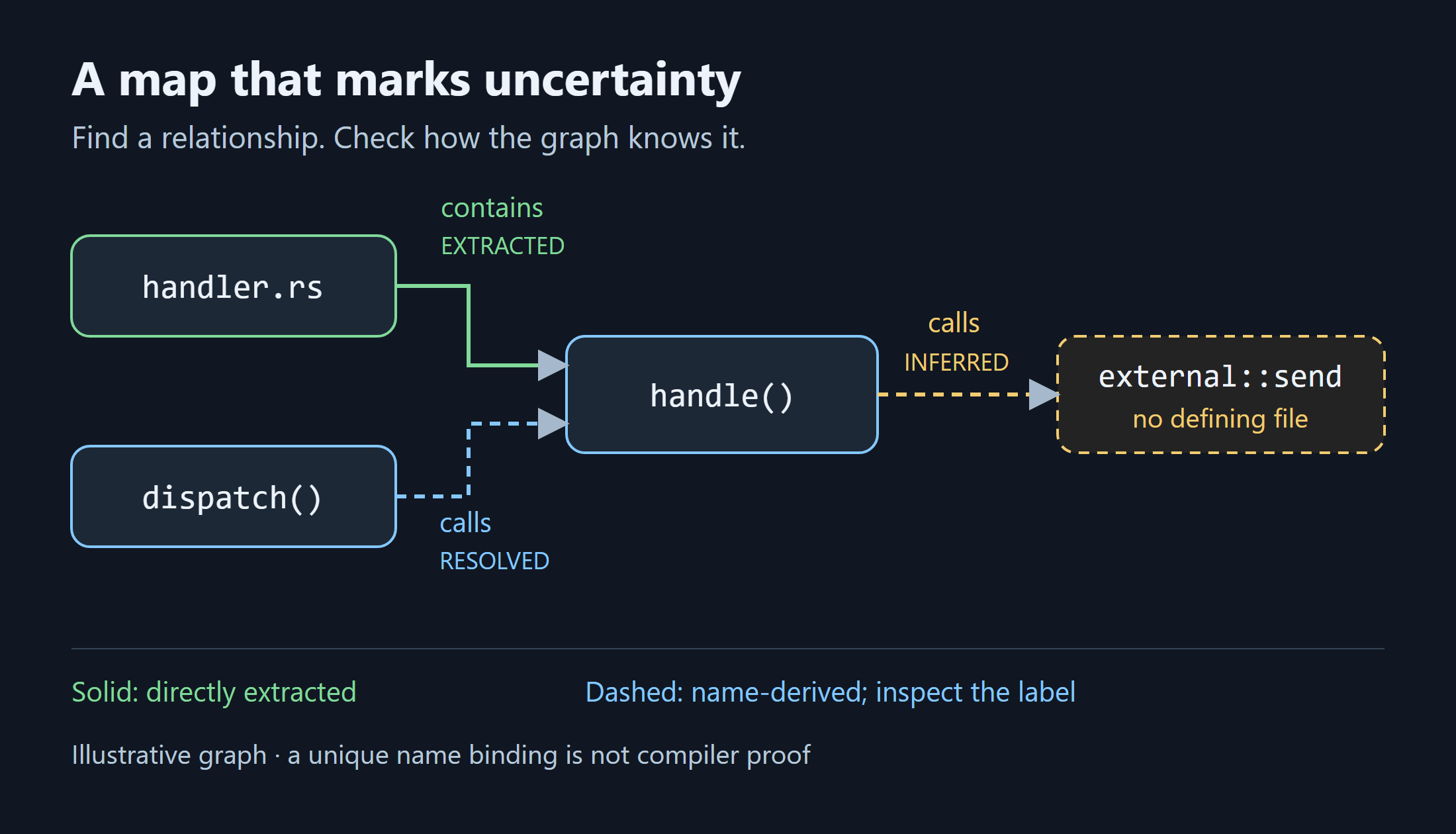
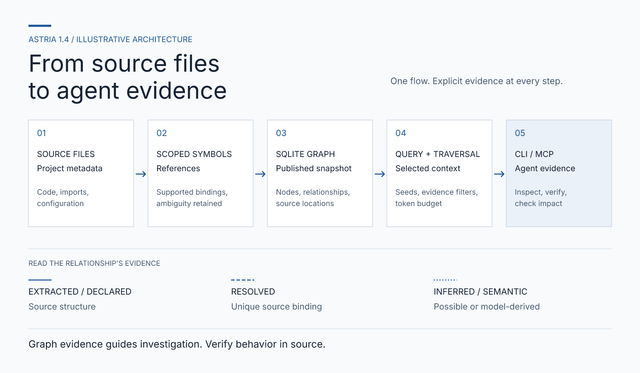
Astria stores a graph in SQLite under .astria/. Nodes represent functions, types, files, packages, document sections, and unresolved names. Edges represent relationships such as containment, calls, imports, and uses.
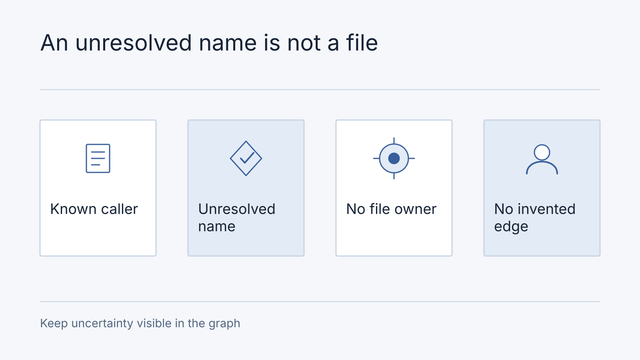
Each edge carries an evidence label, with source locations where available. A file containing a function is directly extracted structure. A call bound by matching names and scopes is name inference, even if there is only one candidate. An unresolved name should remain visibly unresolved.
That distinction makes the map inspectable. It also means a graph query is a starting point for reading source, rather than an authority on runtime behavior.
Structural extraction uses Rust and tree-sitter and needs no API key. Local embeddings and remote semantic enrichment are optional. The registry contains 42 language configurations, with different extraction coverage by language; see the language-support table.
Build your first graph
What changed in 1.4.0
The current release makes supported relationships more precise and uncertainty easier to inspect. Typed receiver bindings stay inside their function or block, exact TypeScript aliases resolve to authored source, and instance-field assignments supply type evidence only when unambiguous. Explicit query seeds disclose same-name candidates instead of choosing a declaration silently.
Graph refreshes now cover the complete incoming merge range, including fast-forward pulls. Supported extensionless scripts and additional declarations broaden extraction, while astria diagnose reports semantic chunk coverage and incomplete reasons. Credential-shaped text is redacted before retention and semantic requests; pattern detection does not guarantee that arbitrary confidential content is safe to send to a provider.
Read Astria 1.4: From Source Files to Agent Evidence for the architecture diagram and examples. The AI workflow defines how to query, disambiguate, verify, and refresh. The historical HTTP example and October 6 measurements below retain their original source and evaluation context; these updates do not establish a new retrieval-quality result.
Install and refresh
With Node.js 22 or newer, run these commands from your repository:
npm install -g @nodesify/astria@1.4.0
astria run .
astria map
Verify that the installation is available in the terminal where you will use it:
astria --versionThe pinned installation above prints 1.4.0. The worked source investigation and October 6 evaluation in this article originally used 1.1.0; do not read their results as a new 1.4.0 benchmark. After astria run ., check that .astria/graph_report.md exists and that astria map returns repository content. If the command is missing, reopen the terminal and check your npm global executable directory is on PATH. If the map is empty, check the indexed directory and the language-support table before investigating retrieval quality.
For an existing graph, run astria update . after upgrading so extraction-rule and symbol-identity changes are reflected in the graph. If you use Git hooks, run astria hook install again to replace the installed scripts with the current versions. Use node IDs from the refreshed graph.
Prebuilt native binaries are distributed for supported platforms, so npm installation needs no Rust toolchain. Build time depends on repository size, hardware, and enabled features.
The map provides a ranked orientation view. For a specific question, query the graph:
astria query "where is bearer token authentication for the http mcp server implemented"On astria’s own repository, relevant results include http.rs, HttpServerConfig, and the native entry point run_mcp_http_server(). Returned node IDs let you inspect connections with astria explain; source locations point you toward the implementation.
If the output warns that indexed files have changed, refresh with astria update . and repeat the query. Updates reuse extraction caches for unchanged files and reconcile references across the current corpus. Use IDs and locations from the refreshed results.
One task, two response paths
Suppose you want to change the unauthorized response returned by the HTTP MCP server. Finding the server entry point is useful, but it does not yet tell you which function chooses that response.
Reading the HTTP server source at the evaluated commit reveals an important detail:
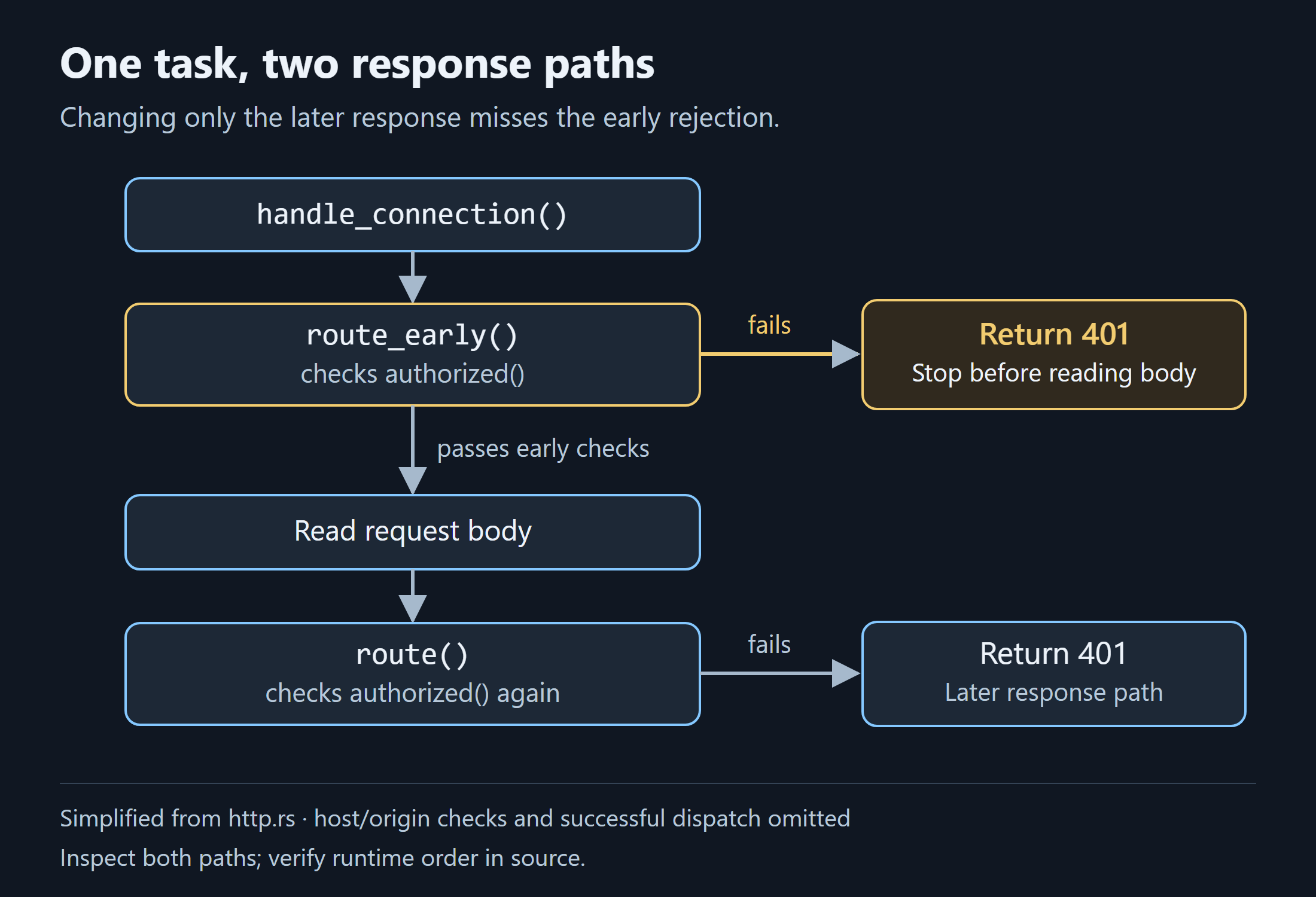
Both route_early() and route() invoke authorized() and construct a 401 JSON response on failure. The live connection handler calls route_early() before reading the request body. Editing only the later route() response would miss the response actually returned for a rejected request.
That is the distinction the investigation needs to uncover. A graph helps locate and inspect relationships; following the source establishes the ordering and behavior.
Before editing, find both symbols and inspect their dependents:
astria query "route_early route authorized http.rs"
astria explain <node-id-from-your-query>
astria affected <route-early-node-id-from-your-query>
astria affected <route-node-id-from-your-query>
Replace the angle-bracketed arguments with IDs returned by your query. affected follows incoming dependency relationships to identify potential callers and other dependents. Use those results as a reading checklist: missing bindings can hide dependencies, and inferred bindings can add false positives. Reachability does not establish what executes at runtime.
For this task, source inspection points to keeping both unauthorized-response paths consistent and checking the connection handler’s early rejection. After editing, refresh the graph with astria update ..
Make the workflow available to your agent
The CLI and MCP server share a retrieval engine. MCP—the Model Context Protocol—lets an agent call tools exposed by a server. Astria’s tools include repo_map, query_graph, explain, shortest_path, and affected.
There are two setup steps: connect the tools, then teach the agent when to use them. For Codex, run this from the repository after building the graph:
astria install --platform codexThe installer writes the skill and repository instructions, and registers the MCP server in Codex’s user-level configuration. Start a new agent session and check that the tools appear. Other supported platforms have their own installation paths in the agent-integration guide.
Repository instructions should make the intended behavior explicit:
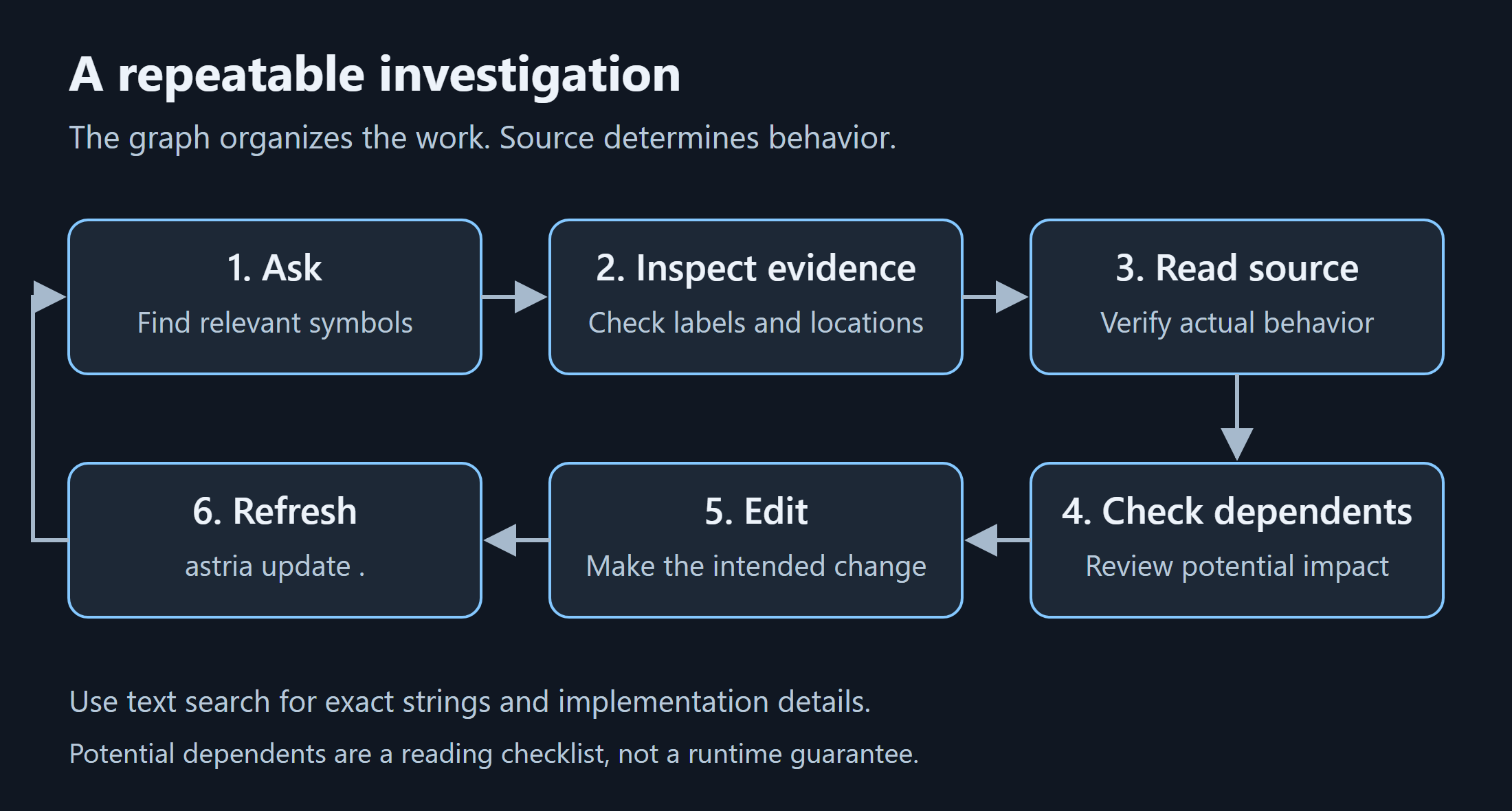
- Orient with repo_map or astria map.
- Query for relevant symbols and inspect evidence labels.
- Verify important results against source.
- Check affected before changing a shared symbol.
- Refresh with astria update . after edits.
- Use text search for exact strings and implementation details.
An instruction file alone does not connect an MCP server. Conversely, available tools do not ensure the agent will use them well. Both parts matter.
Trust the evidence, then check it
We learned why uncertainty matters through a bug in our own graph. Speculative nodes incorrectly borrowed defining-file locations from files that referenced them. Fixing that defect removed 743 phantom file dependencies and four false cycles, while the measured retrieval score on the question set stayed unchanged. Useful search results had concealed incorrect structure. The release record documents these observations; the fix commit shows the implementation.
That is why evidence labels and source verification belong in the workflow. A relationship can be useful without being certain. Strict traversal with --detail high retains only EXTRACTED and DECLARED edges; it also excludes useful name-derived RESOLVED calls, and does not guarantee completeness.
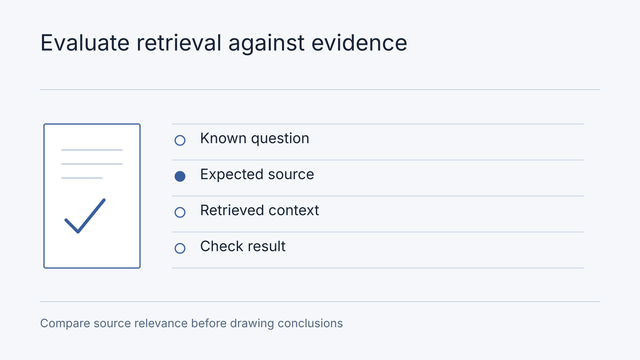
Our October 6 paired evaluation against Graphify found higher file MRR for astria on 7 of 8 corpus/split conditions, while Graphify built faster on 7 of 8. The sets were small and previously exercised. These retrieval measurements do not establish savings over a skilled search workflow or the cost of a completed agent task. The full evaluation documents the tradeoffs and limitations.
Try a question you can verify
A graph trial fits repeated cross-file questions with identifiable source truth. It is less useful for a one-file wording change, an unsupported language construct or a repository nobody can keep fresh. For a synthetic result such as checkout → priceOrder, read the returned path and line, confirm that the caller actually invokes that declaration, and inspect whether the edge is resolved or inferred. The arrow alone is not proof.
Give the first trial an owner: one developer builds the graph, another checks a known relationship, and the team records which edit/merge step triggers refresh. Stop if the graph cannot support the actual question; a searchable index can still be useful without proving dependency analysis. See the evaluation method for a measured adoption approach.
Choose a repository you know and ask, “What calls this handler?” or “Which modules depend on this package?” Compare the graph’s relationships with the source. That gives you a practical way to judge whether the map helps your work.
Use graph queries for relationships and potential change impact. Use text search for exact error messages and configuration keys. Read implementation details to understand behavior. Keep the graph current as the code changes.
A useful map helps you decide where to look. A trustworthy one also marks the places it cannot resolve.
Try Astria’s getting-started guide on a repository you know, then verify one relationship against its source. The open-source repository contains the implementation and contribution guidance. Read the companion articles below for graph correctness and evaluation, or explore more Nodesify engineering articles.
Frequently asked questions
Must source leave our machine, and can we use our existing agent?
Use the documented local AST path to begin. Optional semantic processing has separate backend and data decisions. Follow the current agent integration instructions and verify that your agent reads freshness and source evidence rather than assuming that installation changes its behaviour.
Who owns graph refresh and licence review?
Assign refresh to the repository workflow and review failures as operational work. Astria is MIT-licensed; inspect its repository licence and dependencies against your organisation’s requirements. The source and documentation are the primary self-service path.
Related approaches
Graphify also makes repository relationships available to coding agents; its Claude Code guide describes a platform-specific setup. GitHub’s stack graphs tackle name binding through language-specific rules and constrained graph paths. Astria’s name-derived bindings should not be equated with that resolution mechanism. A graph interface alone does not establish the precision of its relationships.
References and further reading
- Your Code Graph Can Invent Dependencies
- How We Evaluate Code Retrieval Tools
- Astria documentation and source
- HTTP request handling at the evaluated source commit
- October 6 evaluation evidence and reproduction notes (ZIP)
About Nodesify: Nodesify is a Malaysia-based custom software development and IT consulting company, and the team behind Astria.
Astria is MIT-licensed and independently implemented, inspired by Graphify without affiliation or endorsement.